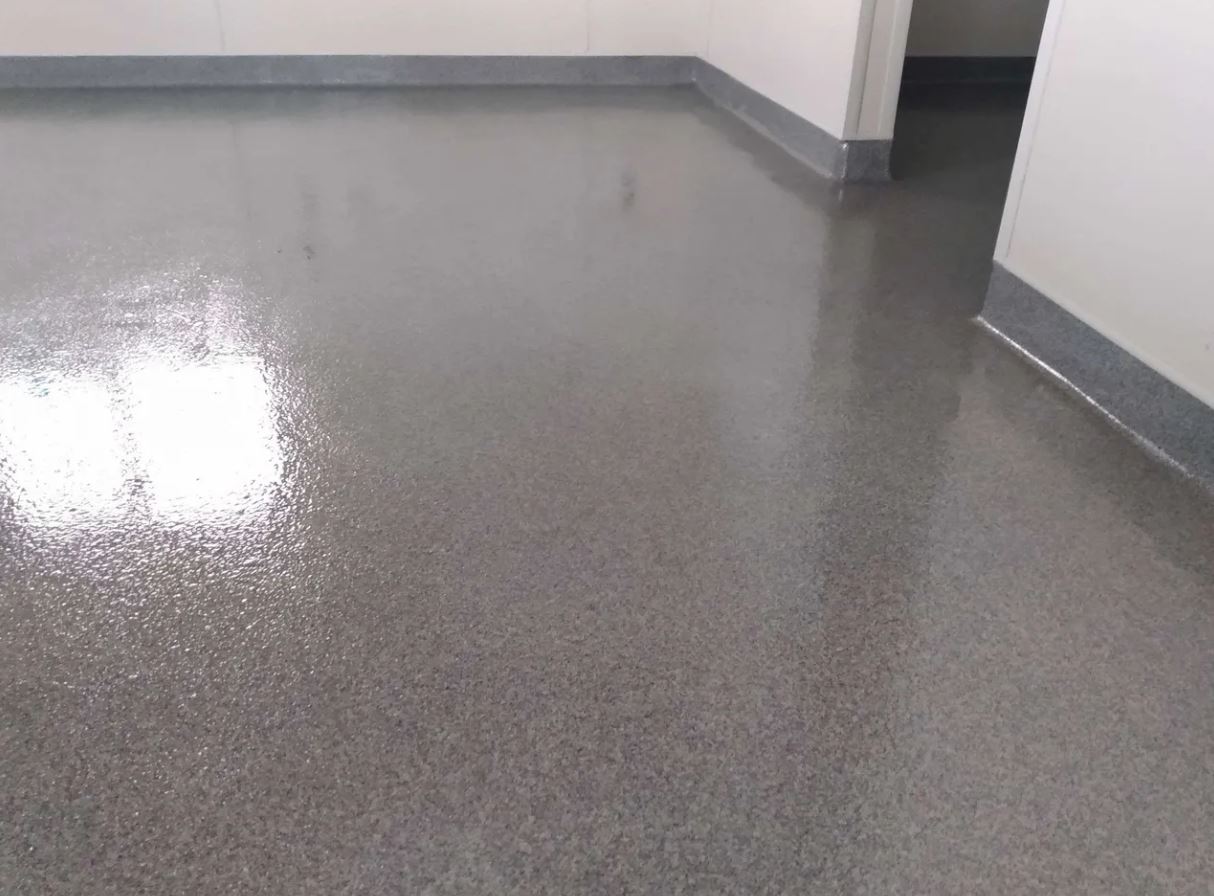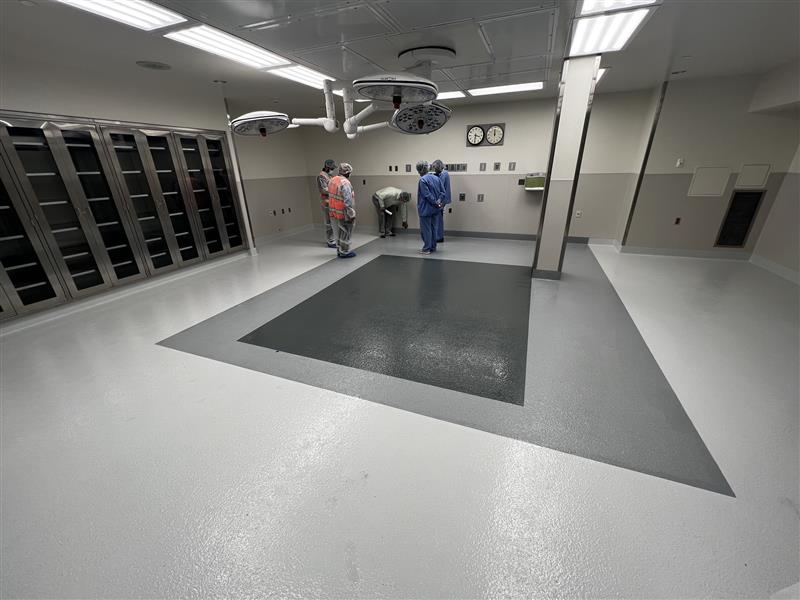
If you've ever seen an epoxy floor fail, you know why "flawless" is a loaded word. The failure usually looks simple. Peeling in the tire lanes. Bubbles under the surface. A hazy patch that never dries. Edges lifting near walls. A finish that looked sharp for a few weeks and then starts wearing through in the exact same places people walk or drive every day.
Those failures are rarely random. They come from predictable causes: poor surface prep, moisture ignored, the wrong system for the space, rushed recoat timing, sloppy mixing, or weak detailing at edges and joints.
Below is what "flawless" actually looks like in a real epoxy installation, step by step, and why each step matters.
Most people think the job starts when the epoxy is mixed. It doesn't. It starts with evaluating the concrete like it's a material with a personality. Concrete varies, even in the same room. Some areas are dense and slick. Some are porous. Some have contamination. Some have old sealers. Some have moisture vapor coming up through the slab.
A professional install begins with a real assessment, because you can't build a long-lasting system on assumptions.
Resin Flooring Experts, LLC highlights diagnostics and problem solving, which matters because epoxy isn't forgiving. If you miss something important early, the coating will eventually show you where you messed up.
One of the most expensive epoxy failures is moisture-related, and it's also the most common one people try to pretend doesn't exist.
Concrete can look dry and still release moisture vapor. That vapor pressure can compromise bond, create blisters, cause cloudy discoloration, or trigger delamination that shows up months later. The worst part is timing. The floor often looks fine at handoff. Then the building goes back into normal use. Then the problems appear.
Resin Flooring Experts, LLC calls out ICRI-certified moisture testing as part of their pre-installation diagnostics. That is a big deal because it tells you they're willing to measure conditions instead of guessing.
When moisture is present, the plan can change. That might mean a moisture-mitigating primer, a different system build, or addressing environmental issues first. The point is not to overcomplicate. The point is to prevent predictable failure.
Epoxy does not magically bond to dirty, smooth, dusty concrete. It needs a mechanical profile. It needs clean pores. It needs the surface to be stable.
This is where many installations fall apart because surface preparation is the least glamorous part of the job and one of the most time-consuming. It also separates specialty contractors from "coat it and go" crews.
Resin Flooring Experts, LLC emphasizes meticulous preparation and attention to detail. In practical terms, that usually includes:
A flawless install needs the surface opened up so the coating can bite. If the surface is too smooth, you get a coating that sits on top like a shell. It will eventually lift, especially where traffic concentrates.
Garages and workspaces often have oil drips, tire residue, salts, silicone, old sealers, paint, drywall mud, or random chemicals. If contamination remains, that spot becomes the weak link later. Many epoxy failures start as small peel points around a contaminated zone.
Edges and corners matter because peeling often starts there. A flawless job doesn't look good only in the middle of the slab. It looks good at the stem wall, at door thresholds, and at transitions.
Concrete dust is a bond breaker if it's left behind. It's also a common reason a floor looks gritty or inconsistent. A disciplined contractor treats cleanup as part of the system, not an afterthought.
Epoxy is not a structural fix for broken concrete. If the slab has spalling, pitting, broken joint edges, or weak patches, those issues have to be stabilized before a coating system can perform.
A flawless install includes repair work that matches the slab's behavior and the space's demands.
Some cracks are stable. Some move. Some are cosmetic. Some are structural. If you treat every crack the same way, you can create a new problem. A repair that is too rigid in a moving crack will re-crack and show through. A repair that is too soft in a high-traffic zone may wear faster.
Control joints exist because concrete moves. Coating over joints without a plan leads to telegraphing, cracking at joint lines, or joint edge failure under traffic. A flawless epoxy installation respects joints and details them intentionally.
A common mistake in epoxy sales is treating epoxy like one product. In reality, performance comes from the system build: primer choice, base coat type, broadcast method if used, topcoat selection, and traction strategy.
Resin Flooring Experts, LLC positions itself around specialty concrete finishes and long-term performance, not one generic coating. That matters because the right system depends on how the floor is used.
A flawless system is designed around real conditions like:
The "right" epoxy system for a decorative home gym floor might be the wrong system for a warehouse lane. A specialty contractor accounts for that.
A flawless epoxy floor is not automatically safe when wet. Slip resistance is something you build into the system based on use.
There are several ways to do it, and the best option depends on cleaning expectations and the environment:
The goal is not to make the floor rough everywhere. Over-texturing can make cleaning harder and trap grime. Under-texturing can create slip hazards. Flawless means balanced.
Epoxy systems depend on chemistry. Chemistry depends on ratios and timing. This is where sloppy crews ruin good materials.
A flawless install requires:
| Requirement | Why It Matters |
|---|---|
| Correct Mixing | If ratios are off or mixing is inconsistent, you can get soft spots, tacky areas that never cure right, or uneven sheen. |
| Recoat Windows | Coatings have timing requirements between layers. If you recoat too soon or too late, you can compromise intercoat adhesion. |
| Environmental Awareness | Temperature and humidity affect cure. Concrete can outgas when temperatures rise, creating bubbles if not managed. |
Resin Flooring Experts, LLC calls out clean lines and protective measures. That might sound like a cosmetic point, but it connects directly to quality and client trust.
A flawless job usually includes:
In residential work, this matters because the garage connects to the home. In commercial work, it matters because dust and mess can affect operations, inventory, and equipment. Either way, it's part of the outcome.
If you want to understand "how they ensure flawless," it helps to understand what they avoid. These are the mistakes that create most epoxy horror stories:
| Mistake | Consequence |
|---|---|
| Skipping Moisture Testing | Moisture problems show up later and often force removal. Testing up front is cheaper than redoing the floor. |
| Under-Prepping the Surface | Cleaning is not profiling. A coating applied to a smooth or contaminated surface will eventually peel. |
| Coating Over Contamination | Oil spots, silicone, old sealers, and adhesives create weak zones that become failure points. |
| Rushing Cure Time | A floor can feel dry and still not be cured enough for heavy traffic. Putting vehicles on too early can damage the system. |
| Treating Joints Poorly | Coating over movement joints without a plan creates cracks and telegraph lines. |
| Choosing Shine Over Function | High gloss can be great, but not if the space gets wet and needs traction. |
Failure is not just an aesthetic issue. It becomes a budget issue and a scheduling issue.
Common outcomes of poor installation:
A flawless installation is mostly about preventing these outcomes through diagnostics, prep, system design, and disciplined execution.
Based on what they present, their approach aligns with what high-performing epoxy installation requires:
Flawless does not mean "perfect forever with no lines or changes." Concrete moves and facilities operate. Flawless means the system is bonded correctly, designed correctly, installed cleanly, and built to handle the way the space is actually used.
A flawless epoxy installation is not one trick. It's a controlled process: evaluate the slab, test for moisture risk, prepare the surface properly, repair what needs repair, select the right system, plan traction, execute with correct mixing and timing, and finish with clean details and protection.
Resin Flooring Experts, LLC signals that kind of process through the way they describe their work: specialty concrete finishes, attention to detail, problem solving, and ICRI-certified moisture testing. If you want epoxy that stays tight to the slab, stays cleanable, and doesn't turn into peeling sheets or bubbling patches later, that professional discipline is the whole point.